

(Spoilers for Toy Story 5)
You can learn a great deal about a culture from its children’s literature.
Children’s stories, after all, are almost always designed to instill specific values. They teach the young about the way the world works and how they should navigate it. Each story comes loaded with a moral, a lesson that will shape the next generation’s actions. Even when these values aren’t obvious they’re lurking beneath the surface, bearing the fingerprints of the culture that made them. Traditional European fairy tales from hundreds of years ago are incredibly dark, often unrecognizable in comparison to their sanitized modern versions.1 They taught children that the world was a dangerous place, that evil exists, and that survival was never guaranteed. This was appropriate for a world that was much more violent than today’s world, and where children were never guaranteed to survive to adulthood.
Closer to the current day, Cold War-era American children’s programs often featured militaristic plots and involved characters with secret identities and double-lives, often hiding in plain sight. Japanese cartoons often include themes of catastrophe and environmental devastation, echoing Japan’s trauma from World War Two, and they frequently emphasize harmony with nature and one’s community. By contrast, modern American children’s cinema almost always features some version of the classic hero’s journey and focuses on self-actualization and discovering one’s true self.
This is why it’s worth taking children’s media seriously. And it’s why the Toy Story franchise has been so consistently fascinating for the last 30 years.
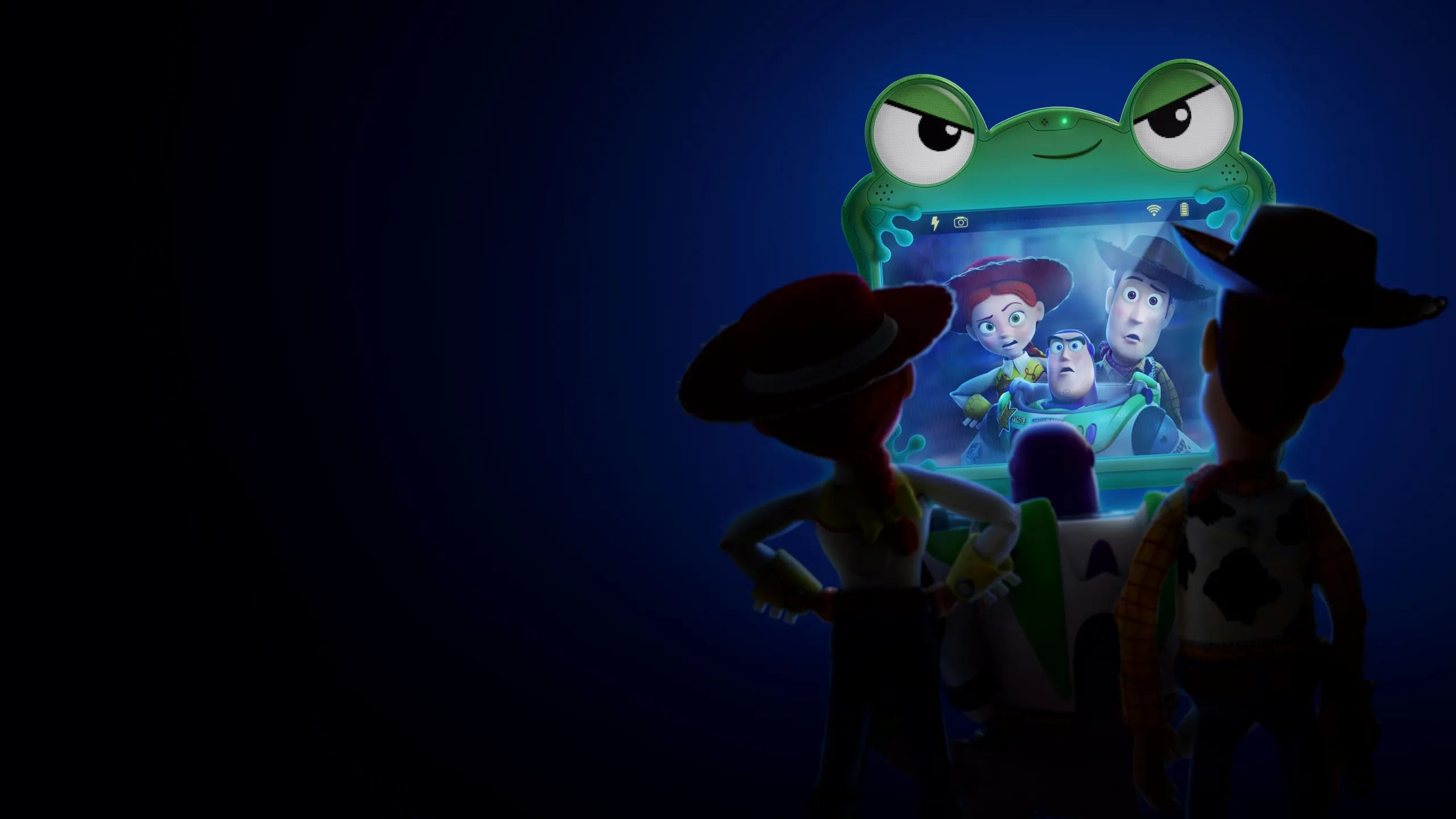
In Toy Story 5, the familiar gang of Woody, Buzz, Jessie and their pals are back for another adventure. Decades have passed since the original movies, and our toy heroes find themselves living with Bonnie, an eight-year-old who loves playing pretend with them but who is socially awkward and painfully shy. Despite some misgivings, Bonnie’s parents end up buying her a frog-themed children’s tablet called Lilypad. Lily (as she’s called) becomes the central antagonist for most of the film’s duration and sets up a straightforward toys-vs-tech plot. “The age of toys is over” laments one set of disused toys, whose family now universally spends their time with screens. At one point, in a scene that could have been ripped from the pages of Jonathan Haidt’s The Anxious Generation, the toys very deliberately emphasize the difference between games that live on a screen and play that requires freeform imagination and exists in the real world.
Toy Story 5 certainly wants to say something profound about the nature of technology, but it’s held back by a number of factors. The first is that as an exercise in storytelling, the film is merely good, not great. It’s fine. It reliably hits the beats of the plot and translates them into forward momentum and emotional catharsis. But many of the story’s beats are repetitive, as though the writers were struggling to come up with new ideas. An older toy is threatened by a newer, shinier object - just like the first Toy Story. Jessie has to deal with unresolved emotional trauma centered around how her original child abandoned her - just like Toy Story 2. Buzz and Jessie have a romantic subplot, just like Toy Story 3. What’s that? A rogue group of Buzzes must learn they are actually toys, not space rangers? While the main cast tries to figure out how to deal with children that are growing up and changing? Quelle surprise! They say an old dog can’t learn new tricks, and maybe that’s true of old toys (and their screenwriters) as well.
I’m not sure how much this repetition really matters. The themes are durable and universal, and the children seeing the film today weren’t alive for most of the story’s previous installments. And their Millennial parents are likely here for the nostalgia factor, and don’t mind that Pixar is just playing the hits.
The tech storyline is also held back because Pixar’s screenwriters can’t quite bring themselves to fully commit to the bit. Perhaps it’s because the corporation ultimately financing this movie has quite a lot of money wrapped up in the digital ecosystem. Or perhaps the film’s producers were sharply aware of the irony that a generation of children would be watching their anti-tech movie with glazed eyes on their own iPads. But either way, Toy Story 5 ends up equivocating on whether technology is harmful. Lilypad is initially antagonistic and arrogant, believing she knows better than the old-fashioned toys how to help Bonnie make friends. But when her efforts fail, she changes her approach and ends up working cooperatively with the toys. The film’s message is ultimately more pro-human connection rather than anti-tech. To the extent that technology ends up isolating and disconnecting people from their communities, it’s bad - but when it helps bring people together, it can be good. This message is more nuanced, and perhaps ultimately more correct, but the nuance robs the film of the clean moral certainty that makes for a great children's story.
What’s more interesting are the journeys the toys themselves have made over the decades, especially in how they relate to the human children in the movie. The best way to understand the children in the Toy Story franchise is to realize that they effectively function as unknowable eldritch gods to the toys, who of course are the film’s actual protagonists.
